Can CO2 Utilisation Beat Emissions?
Europe is suffering from potentially the worst heatwave since the records began. Fans and air conditioning units are being sold out as people seek ways to cool down amidst a very obvious impact of global warming. Everybody knows that the ever increasing rising greenhouse-gas concentrations, driven mainly by fossil-fuel use, are causing global warming, so wouldn’t it be nice to get rid of them and get back to temperatures in the low 30s instead of low 40s? How about using CO2 for something good?
Multiple uses for CO2 already exist and more are being developed. The hope is there, but if we look at the scale of total CO2 emissions, we are still a long way away from meaningfully reducing them through CO2 utilisation alone. Avoiding emissions in the first place could still deliver the highest return in our journey of reducing CO2 emissions, but that does not mean the other approaches should be written off as hopeless. They can still deliver results, and in this blog I look in detail how and where.
What actually is CO2 and why is it the focus?

As we all know, CO2 is an invisible, tasteless gas under normal circumstances and non-toxic at normal atmospheric concentrations . That was a big shock to me as a kid, when I learnt that the mineral water, which I so liked, had plenty of CO2 in it. I am drinking the same gas that is killing the environment?! It didn’t make sense at first - I thought CO2 itself was the problem. The funny thing is that it both is and isn’t.
Why it isn’t a problem?
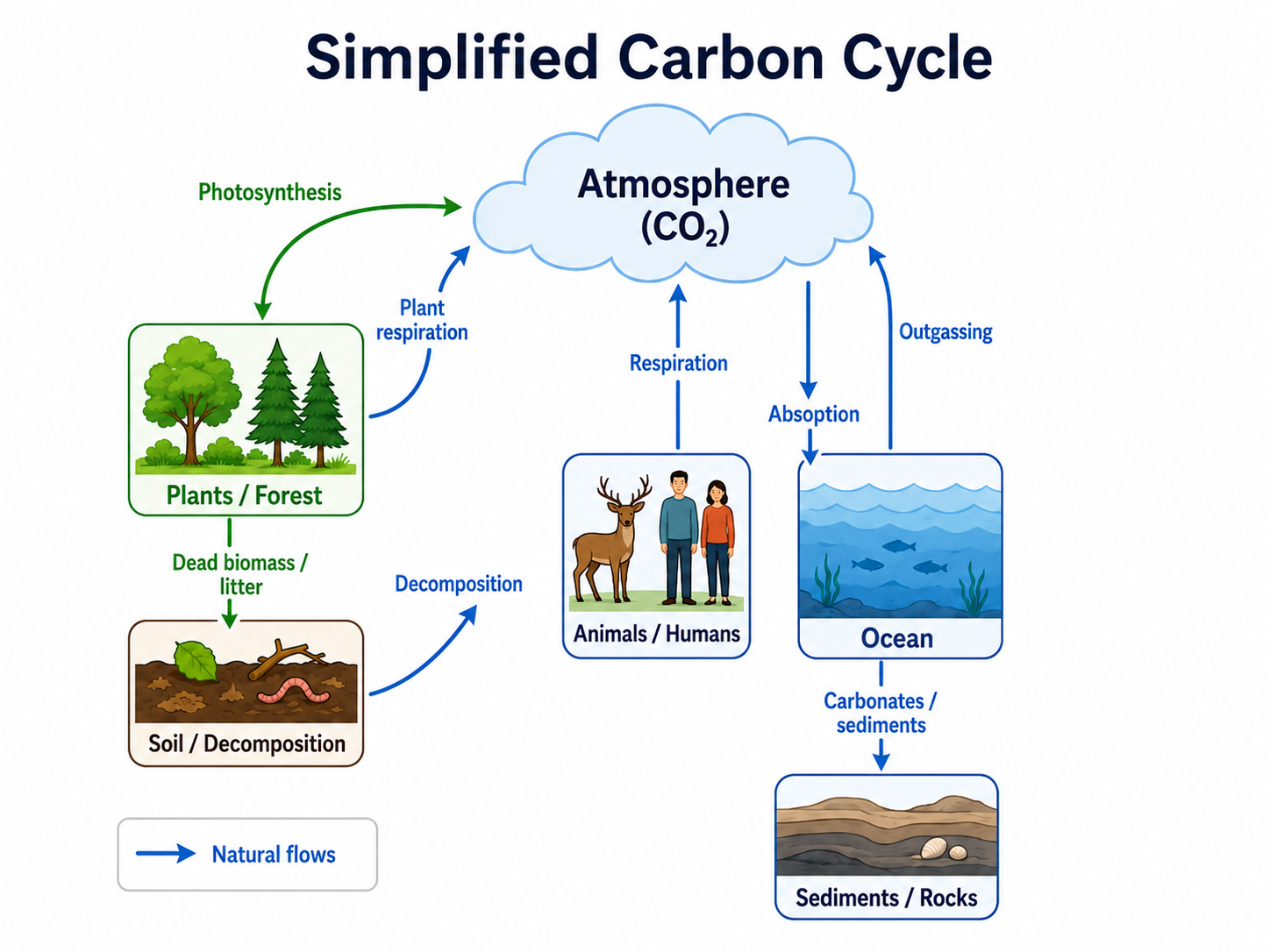
CO2 is not a gas uniquely created by humans, it has always naturally existed in the atmosphere. More than that, it is essential for life as it forms part of the carbon cycle - the process through which carbon circulates through atmosphere, soil, water, and living organisms. It sounds simple enough but the scale is huge - roughly 750 giga tonnes of CO2 (about 20 times annual human CO2 emissions) move through gross natural exchanges annually (CO2 Human Emissions). Without it we wouldn’t be here - plants use it to grow (through photosynthesis) and release oxygen that we need to breathe.
When is it a problem then?
The mere presence of CO2 is not the issue - its concentration, however, is. As mentioned before, carbon circulates in a cycle. It exists in the atmosphere as CO2, which gets then absorbed by plants or oceans, and gets released back into the atmosphere through respiration. We breathe out CO2, plants both release and store it in themselves as they grow. All of the carbon sinks and sources constantly move the carbon between them, and, if all works well, are in balance - CO2 concentration is neither too high, nor too low.
But as we use fossil fuels, cut down forests, the balance gets disrupted. We as humans release carbon that has been stored in fossil fuels and vegetation leading to increased CO2 emissions. As a result the CO2 concentration increases which leads to earth’s heat being trapped in the atmosphere instead of radiating away in the cosmos - hello heatwave.
How far away are we from the balance?
It is not easy to give a single answer without any caveats to that question. What if we say that since CO2 is natural, why not return to the real, natural CO2 levels, meaning, before we started burning fossil fuels in large quantities? Then the target should be pre-industrial CO2 concentration of about 280ppm in 1750 (Global Carbon Budget 2025). Compared to today’s concentration of 428ppm, the CO2 concentration has increased by 53%. That equals approximately 1.15 trillion tonnes of CO2 over the last 275 years.
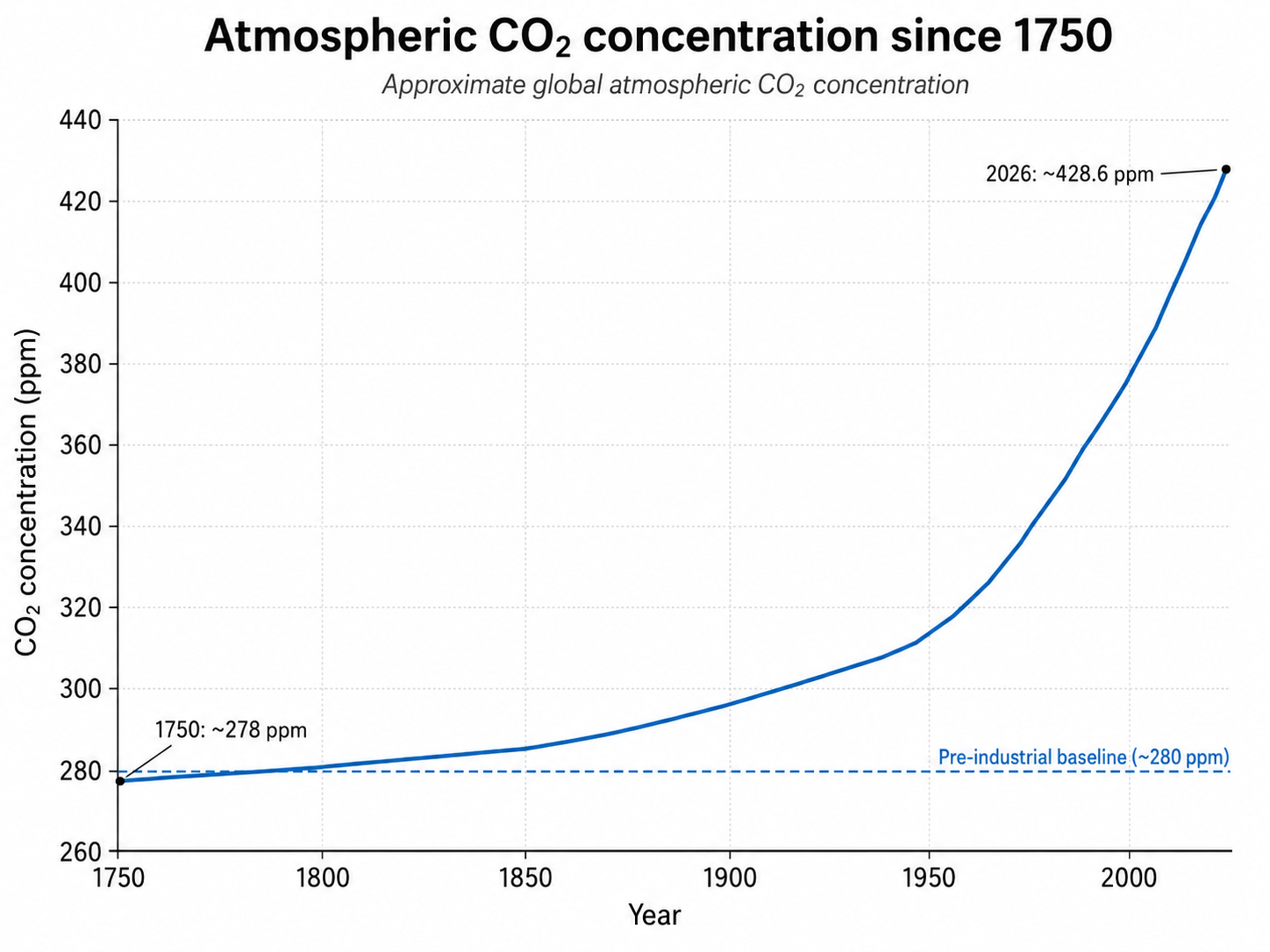
Humans emit about 40 billion tonnes of CO2 per year, so even if we stopped all emissions right now, the amount of CO2 we would need to suck out from the atmosphere and put somewhere would be nearly 30 times yearly emissions. Neither eliminating all of the emissions, nor capturing the CO2 that’s already in the atmosphere is realistic in the near term, and questionable in the long term as that would mean not only giving up the comforts of everyday life, but also significantly reducing the amount of food being produced - fertilizers ensure the yields of today yet are CO2-intensive.
What about another, more reachable target? If we look at nature once more, we know that it can absorb about 50% of the added human emissions - that means we have about 21 billion tonnes of CO2 that we need to somehow get rid of each year. While not a formal net-zero target, it works as a simplified target for comparing the potential scale of different CO2 uses.
What options do we have?
The first and the most obvious is, of course, reducing CO2 emissions in the first place. Electricity and heat, transport, and manufacturing and construction are the three largest CO2 emitters - responsible for about ¾ of all CO2 emissions (Our World in Data emissions by sector). So replacing fossil fuels with renewables for electricity generation or switching to battery electric cars instead of petrol or diesel vehicles are all options that can deliver significant CO2 reductions. For manufacturing, however, we can turn to CO2 capture at the factory level - capturing CO2 right before it enters the atmosphere.
CO2 as a tool.
Such technologies already exist, allowing to capture up to 90% of the CO2 emissions. Not ideal, but at least a starting point. The companies, however, have to spend money to capture it, making their products more expensive due to increased operational costs. But what if we could use CO2 productively and turn it into a resource instead of cleaning it up as a waste?
CO2 for growth.

Let’s look at the one area where CO2 already is a resource - plants. We all know that plants need CO2 to grow. Why not then give plants more of it so they grow faster? This approach will not work on the open fields, but it is an approach that is being practiced in greenhouses. The greenhouse operators could buy captured manufacturing CO2 and utilise it. The concentration has to be quite high - 800 to 1000ppm - for it to have meaningful effect, so almost double the current atmospheric concentration (Air Liquide greenhouse CO₂ enrichment). Sounds like a solution in our CO2 reduction journey!
What impact are we talking about? There are about 1.3 million hectares of greenhouses globally. Maintaining 800-1,000 ppm may require approximately 20-50 kg of CO2 per hectare per operating hour, depending on the crop, greenhouse and ventilation. Assuming 2,000-3,000 enrichment hours annually, supplying all 1.3 million hectares could theoretically require around 50-200 million tonnes of CO2 per year.
Sounds huge, but it is barely 1% of the 21 billion tonnes we need to get rid of. Moreover, nearly all of the plants grown in the greenhouses will be consumed resulting in the CO2 merely recycled, rather than stored. It is a start, but we need something more impactful.
Refreshing instead of heating

I already mentioned the carbonated drinks in the beginning - perhaps that is a solution? After all, who doesn’t like a sparkling, refreshing drink, especially in the heatwave. As mentioned at the start, CO2 itself is tasteless, so using captured CO2 should pose no risk, assuming that it is a pure CO2. How much CO2 could we pack in all the bottles globally?
In 2023, about 250 billion litres of carbonated drinks were consumed globally - that sounds like a lot of hydration (Research and Markets carbonated soft drinks). It is almost enough to completely fill the lake Tegernsee in Bavaria (almost 80% of it). If we assume that about 8g of CO2 are needed per each liter of a refreshing drink, then we could pack 2 million tonnes of CO2 in all carbonated drinks.
That is barely 0.01% of the 21 billion CO2 that we need to get rid of. Although it might help Coca Cola to sell some more bottles, the captured CO2 in them will not be a game changer for the climate.
Building the CO2 away.
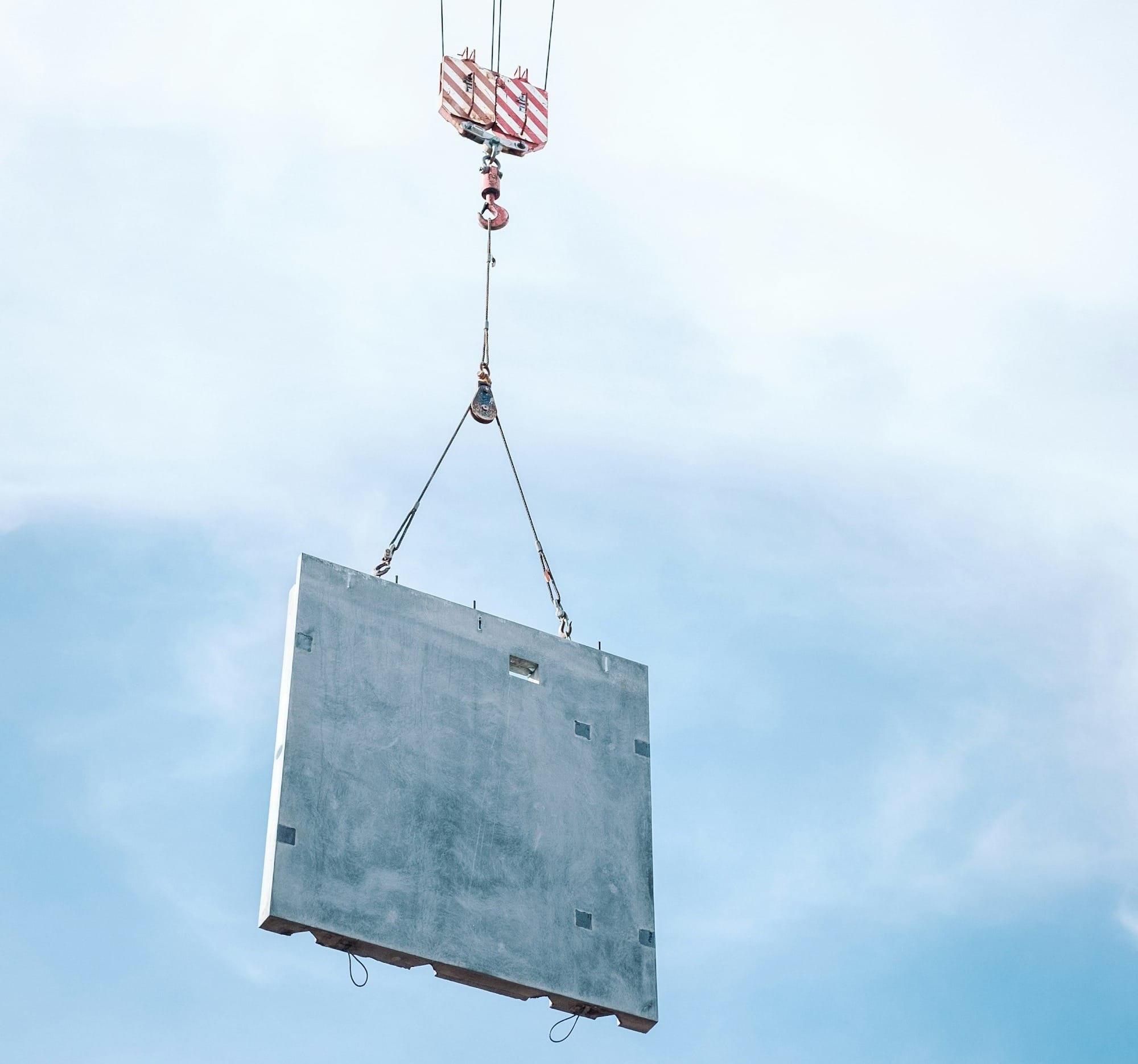
Ok, so far none of the solutions have delivered a large reduction, let alone a permanent one. So let’s look at something more promising - using captured CO2 in construction. How would that work? Buildings are solid, but CO2 is a gas. The answer is mineralisation. CO2 can react with calcium- or magnesium-rich materials and become a solid carbonate, chemically similar to limestone. Once mineralised, the CO2 is no longer escaping back into the atmosphere - sounds like a win!
How can we mineralise the construction sector? There are several ways of doing this. CO2 can be injected into fresh concrete or introduced while factory-made concrete elements are curing. The reaction creates tiny calcium-carbonate crystals that can strengthen the material, allowing manufacturers to reduce the amount of cement needed. Finnish startup Carbonaide already uses this approach commercially for precast concrete. Another option is to expose crushed demolition concrete, steel slag or incinerator ash to concentrated CO2. Swiss startup Neustark, for example, stores around 10 kg of CO2 in each tonne of demolished concrete and 15-35 kg in a tonne of slag or ash. The treated material can then be reused as aggregate in new concrete or road construction.
A more ambitious approach is to manufacture entirely new cement-replacement materials. Companies such as Paebbl and Co-reactive react captured CO2 with minerals such as olivine or metallurgical slag. The resulting powder stores CO2 while replacing some of the clinker in cement. This delivers a double benefit: CO2 is permanently stored and less conventional cement has to be produced. Paebbl says that one tonne of its material can contain as much as 220 kg of mineralised CO2.
So, do we finally have a solution to deliver a considerable reduction? A 2024 study evaluated ten concrete-mineralisation technologies and estimated that the currently cost-competitive options could reduce emissions by up to 390 million tonnes of CO2 per year (PNAS concrete mineralisation study). That would equal approximately 1.9% of our 21 billion tonnes. In an optimistic theoretical scenario, concrete mineralisation could address around 7% of our simplified 21 Gt annual gap. Actual deployment remains far smaller, and not all of that benefit represents COq physically stored. That will not solve all of our problems, however, when compared to the other approaches listed so far, this would finally be a permanent reduction of CO2.
Reuse and conversion
How else could we utilise CO2? One of the largest existing uses is urea fertiliser, consuming around 130 million tonnes of CO2 annually. That sounds substantial, but it is still only around 0.6% of our simplified 21 billion tonne problem. Similarly to the greenhouse and drinks use cases, the carbon is released again when the fertiliser is used.
Another approximately 80 million tonnes is used for enhanced oil recovery, where CO2 is injected underground to push more oil from underground. Some of that CO2 remains underground, but using captured carbon for fossil fuel production is like trying to put out fire with gasoline.
A potentially much larger impact could be delivered by synthetic fuels. Here captured CO2 can be combined with hydrogen to produce methanol, methane, aviation fuel or synthetic diesel. This could be useful for aviation and shipping, where direct electrification is difficult. But again the CO2 is released when the fuel is burned.

Plastics and chemicals are potentially among the larger CO2 uses. Replacing the fossil carbon in today’s plastics with captured CO2 could theoretically consume around one billion tonnes of CO2 annually (Our World in Data plastics emissions). That would be significant at about 4,7% of our 21 billion tonnes goal. However, just as with synthetic fuels, CO2-derived plastics would require substantial clean energy and hydrogen making their market introduction an uphill battle. Nevertheless, considering CO2-derived plastics could be a replacement for oil and act potentially as a longer duration storage of CO2, as long as the products remain in use or are recycled .
An interesting application of CO2 is conversion into solid carbon products, including graphite, carbon black, activated carbon, graphene and carbon nanotubes. These products have high added value and could be used in batteries, tyres, electronics and construction. The appeal is clear: the carbon can remain in solid form for a long time. But these are relatively small material markets as batteries do not consist predominantly of carbon, so no massive CO2 reduction potential.
Final thoughts
We have covered a wide range of options for reducing emissions through CO2 utilisation. These technologies are worth developing, particularly where they replace fossil carbon or store CO2 permanently. But we cannot yet present utilisation as a solution to the overall CO2 problem. Most markets remain too small to make a major global impact, while many applications merely delay the carbon’s return to the atmosphere.
On a more positive note, the scientific and industrial work is far from finished. I believe that there are significant opportunities to improve both CO2 capture and its conversion into useful materials. We may never find productive uses for all residual emissions, so the avoidance will remain the priority and permanent storage will still be necessary. But every tonne of CO2 that can be economically and permanently incorporated into a useful product is one less tonne that must be released or buried underground.